MovementUndated
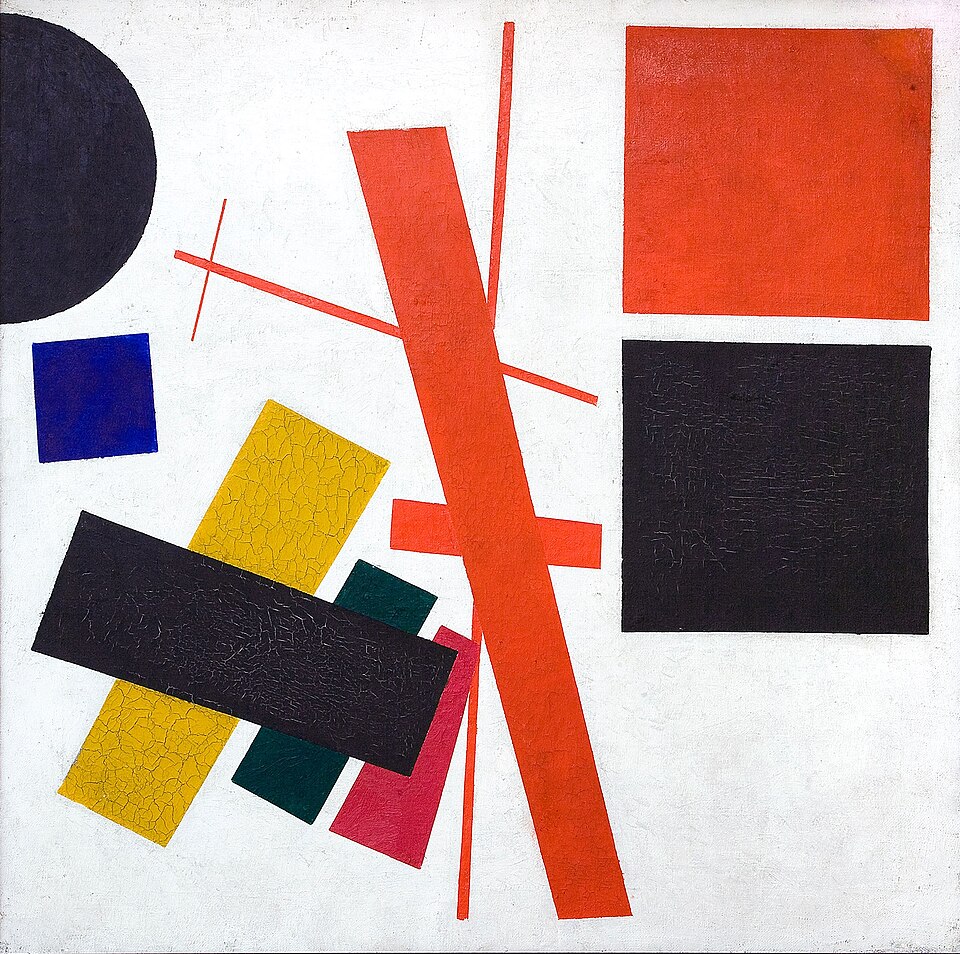
Suprematism
Elementary geometric forms float in open space, with balance produced through position, angle and scale.
Isolated geometry
Heavy typography, diagonals and geometric structures make a page feel active and forceful.
Constructivist graphic communication connected experimental form with social and political purposes. Diagonal structures, bold typography and photographic montage recur in posters and publications. Constructivism, Productivism and agitprop overlap historically but describe different things; they are not stored as synonyms here.
El Lissitzky · Alexander Rodchenko · Varvara Stepanova · Gustav Klutsis · Vladimir Tatlin
Historical context draws on the supplied research. Approximate periods are reference ranges, not fixed boundaries. See the source notes below.
Use one dominant directional axis to organize contrasting scales.
A red-and-black palette is not enough; structure carries the composition.
Elementary geometric forms float in open space, with balance produced through position, angle and scale.

Asymmetry, directional relationships and clear typographic contrast organize the page around communication.