TechniqueUndated
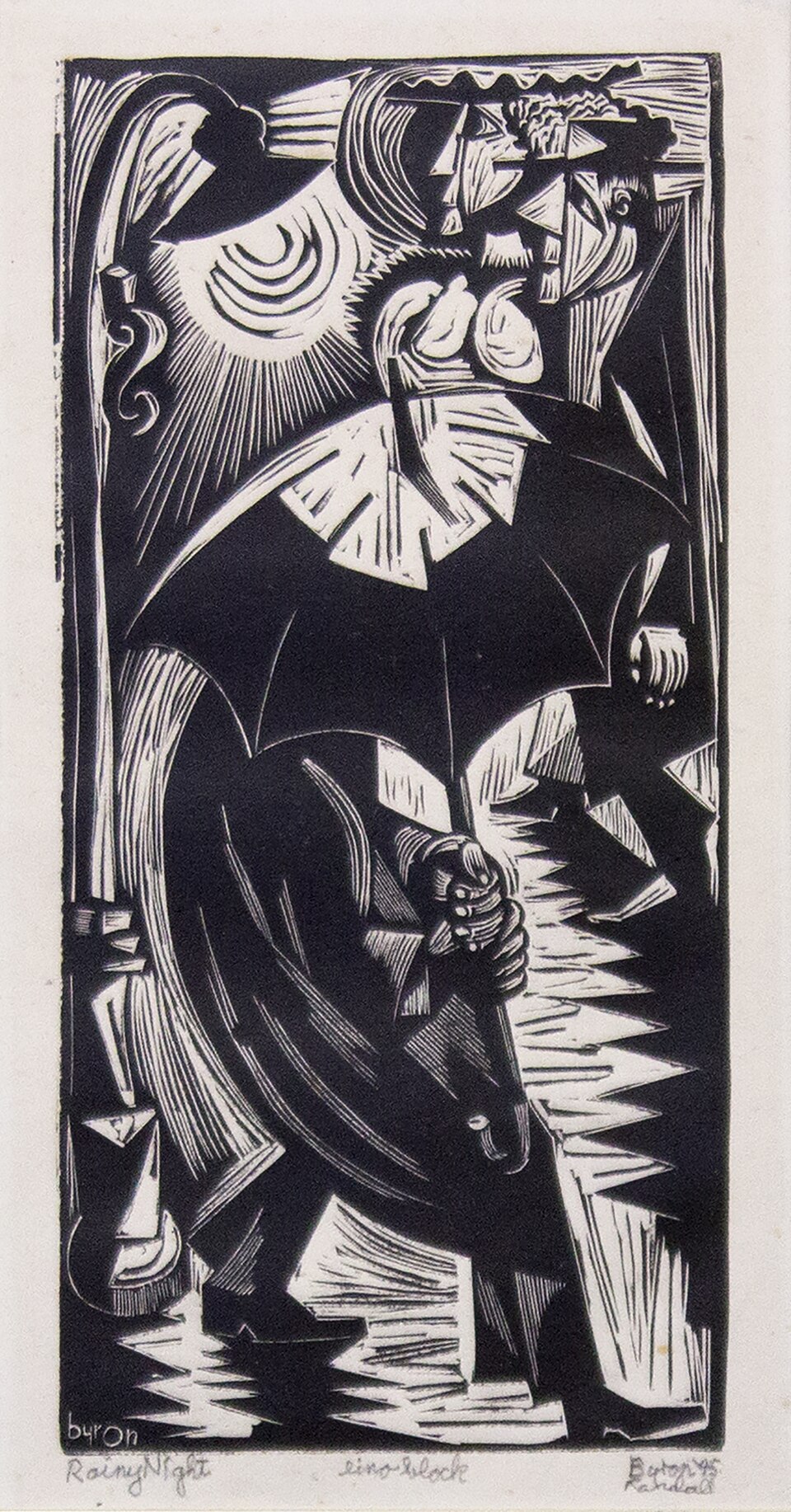
Linocut
Cut marks and broad printed shapes make a composition feel direct and tactile.
Bold silhouettes
Carved lines and printed solid areas turn the contrast between ink and paper into an expressive surface.
Woodcut is a relief printing technique in which a wooden block is carved so that the image stands up from the surface. The raised areas are inked and paper is pressed onto them, either in a press or by applying pressure by hand, as with Japanese ukiyo-e prints. In Europe, woodblock printing appeared in the twelfth century for decorating textiles, and its use for printing on paper followed by the late fourteenth century.
Historical context draws on the supplied research. Approximate periods are reference ranges, not fixed boundaries. See the source notes below.
Think about the white cuts as actively as the printed areas.
A rough image is not necessarily a woodcut; the mark-making logic matters.
