
Stylec. 1890–1914
Art Nouveau
Organic lines connect lettering, figures and ornament into a continuous decorative surface.
Whiplash curves
Stylized ornament and geometric discipline bring decorative surfaces into tension with structural order.
The Vienna Secession was formed in 1897 when Gustav Klimt led a group of young Austrian artists and architects out of the Vienna Künstlerhaus, then dominated by academic traditionalists. The group aimed to transform not just the visual arts but aesthetic life as a whole. In 1898 it launched the journal Ver Sacrum and built its own exhibition hall, which showed its members' work and brought international avant-garde art to Vienna. In this period Klimt's art turned toward a flatter, more linear manner influenced by Greek vase painting and Japanese woodcuts.
Historical context draws on the supplied research. Approximate periods are reference ranges, not fixed boundaries. See the source notes below.
Balance a clear frame with a more intricate interior rhythm.
Keep this distinct from the more flowing versions of Art Nouveau.
Organic lines connect lettering, figures and ornament into a continuous decorative surface.
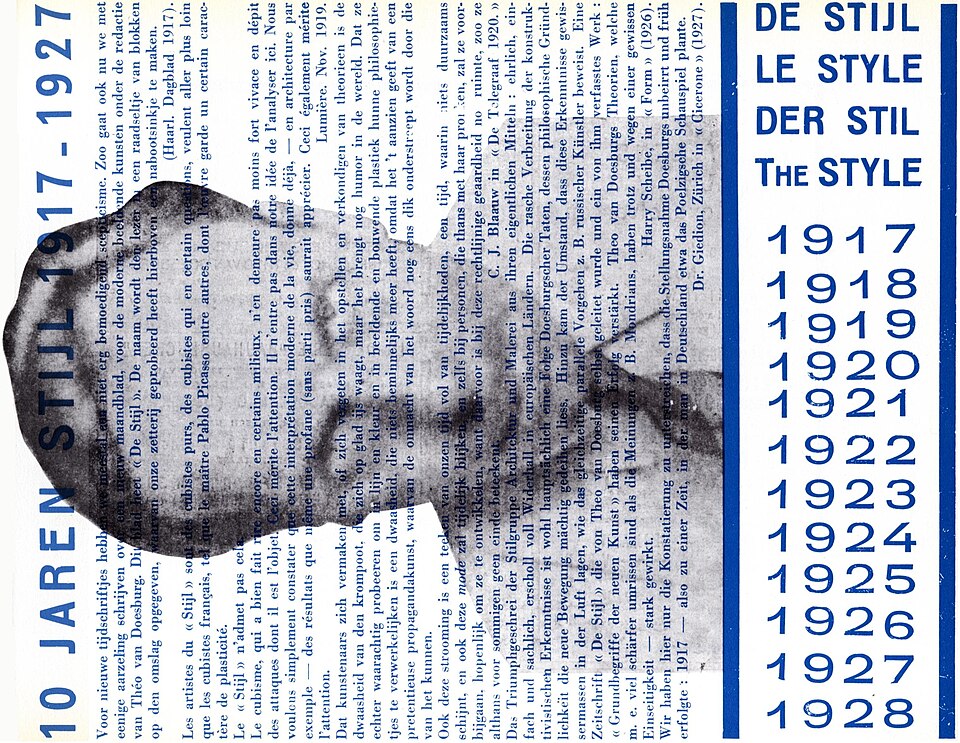
Horizontal and vertical relationships organize flat geometric fields into an asymmetrical equilibrium.