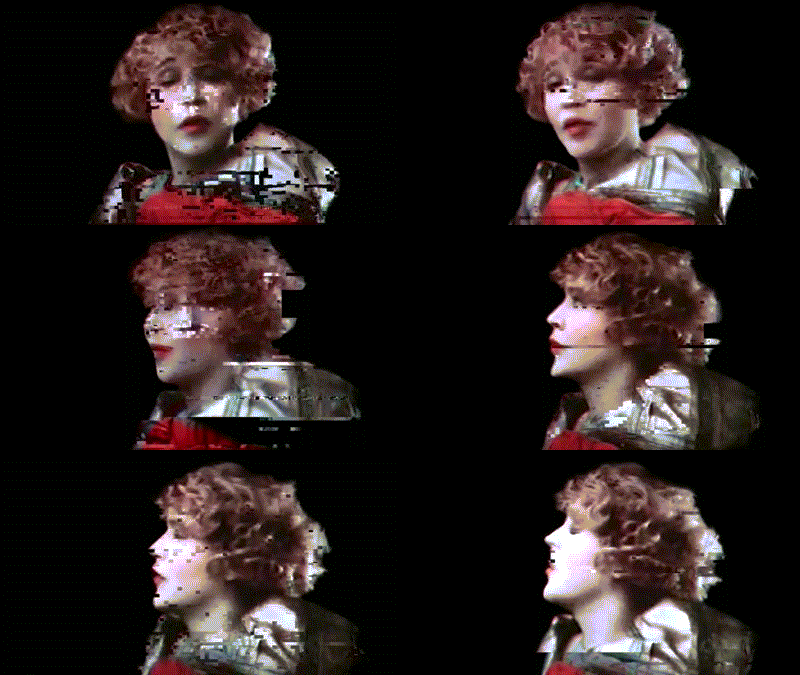
AestheticUndated
Glitch art
Displacement, corruption and interrupted repetition make the image appear to malfunction.
Channel offsets
Discrete pixel placement defines contours, texture and shading at a deliberately limited resolution.
Pixel art is digital art made in graphics software with the individual pixel as its only building unit. It is closely tied to the low-resolution imagery of 8-bit and 16-bit era computers, arcade machines and game consoles, and works typically limit colour palettes and file size, whether from technical constraint or for aesthetic effect. The term was first published in 1982 by Adele Goldberg and Robert Flegal at Xerox PARC, and the form saw renewed popularity in the 2010s through games such as Undertale and Stardew Valley.
Historical context draws on the supplied research. Approximate periods are reference ranges, not fixed boundaries. See the source notes below.
Choose a working resolution and scale it by whole-number multiples.
Automatic pixelation does not replace deliberate cluster design.
Displacement, corruption and interrupted repetition make the image appear to malfunction.

Simple silhouettes and clear color separation reduce the appearance of physical depth.