TechniqueUndated
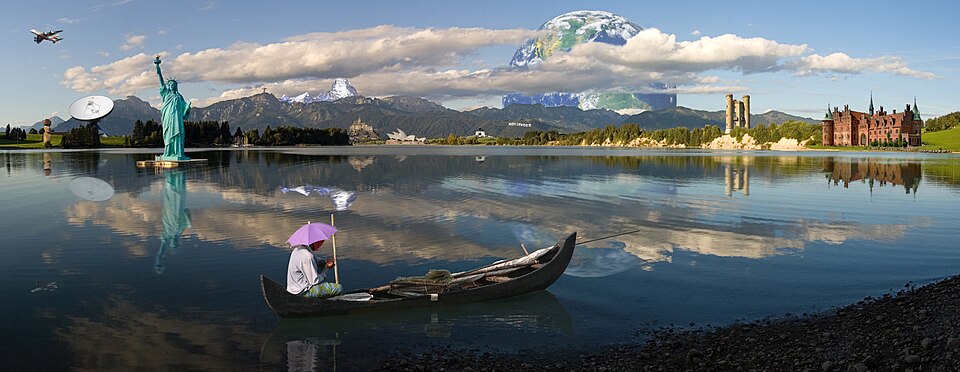
Photomontage
Photographic fragments are combined to create an image that a single camera exposure would not produce.
Cut photographic edges
Light silhouettes against a deep blue field emphasize contact, exposure and the shape of an object.
The cyanotype is a photographic process devised by Sir John Herschel in 1841 that produces a continuous-tone image in Prussian blue. It relies on a sensitising solution of ferric ammonium citrate and potassium ferricyanide, whose iron salts are reduced when exposed to natural or artificial ultraviolet light and then yield a high-contrast blue image on oxidation. The process was long used to copy engineering and architectural drawings before photocopiers became common, and photographers also used it for botanical records, still lifes and proof prints from negatives.
Historical context draws on the supplied research. Approximate periods are reference ranges, not fixed boundaries. See the source notes below.
Use a small number of strong silhouettes and leave the tonal field intact.
A blue filter on a photograph does not reproduce the contact-print process.
Photographic fragments are combined to create an image that a single camera exposure would not produce.
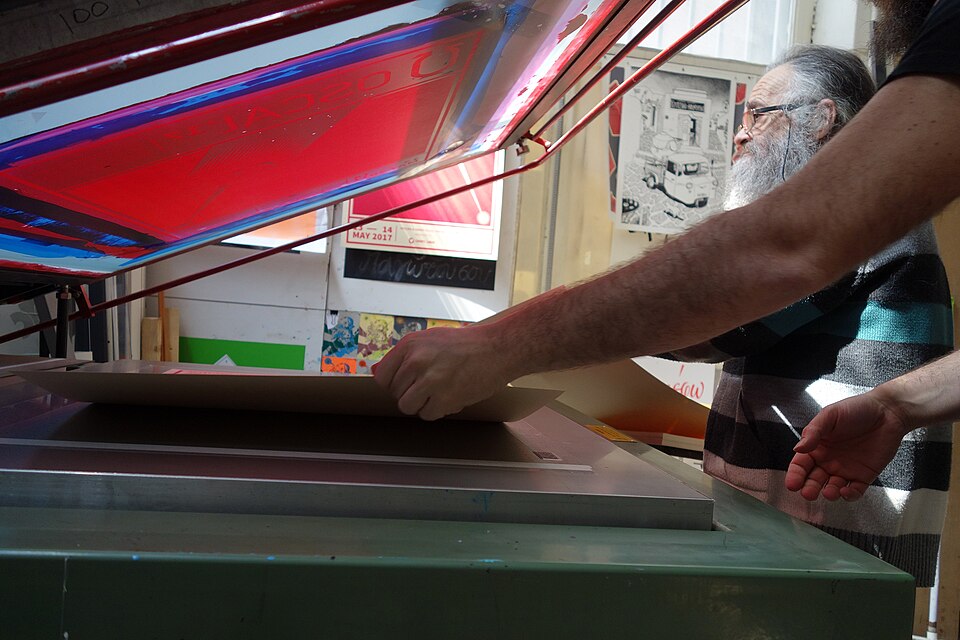
Separate ink passes produce strong silhouettes, opaque color and purposeful overlap.